Rachel Ford James / Flickr
This is a post by BargainBabe.com writer Yazmin Cruz.
Although many of us use herbs to enhance flavors, using herbs as the star instead of expensive meats will save you money big time. (Recipes below.) Especially if you grow the herbs yourself! Below I’ll show you the basics of growing herbs.
A while back Bargain Babe started a recession garden with herb plants she bought at a hardware supply store. I suggest you start with seeds to save even more money. You don’t need a lot of space, but you will need to know this:

jspatchwork / Flickr
This is a post by BargainBabe.com writer Yazmin Cruz.
With the weather getting warmer, gardening season has officially begun. You may already have seedlings growing in containers that are ready to be transplanted, but before you do that here are four things you need to accomplish to reap the benefits.
- Remove weeds - These little suckers will sprout anywhere, even from cement and they will suck the life out of your plans by feeding off of the soil’s nutrients. Spending a good amount of time removing weeds will pay off. Make sure to get to the root of the problem by digging them out and not just pulling them.
- Take a Soil Test – Check soil
I started a fall garden in August and so many sprouties popped up that I had to transplant some of them outside prematurely. I was resigned to seeing the outdoor seedlings die because they are not hardy enough, until I mentioned my dilemma to a gardener friend.
Cut a clear plastic bottle in half, remove the label and cap, and you’ve got a mini-greenhouse, she said. Brilliant!
The hole at the top lets air in and moisture out, while keeping the seedling a few degrees warmer. The mini-greenhouse also protects from harsh winds and rain storms.
You can use bottles of soda, seltzer, water, or anything else that comes in clear packaging (to let the sun through). I bought two bottles of seltzer for $.50 each and made four mini-greenhouses, three of which are pictured above. For the bottom half of the bottle, I was not able to cut a hole in the center because the plastic was too thick. Instead, I cut a hole off to the side of the bottom, where the plastic is (more…)
This is a post by BargainBabe.com writer Yazmin Cruz.
Pest in your garden will destroy your plants and your edible investment. If you’re willing to make your own remedies, your plants will have a chance to thrive. Here’s how to naturally combat some major offenders with supplies you have around your home.
Ants
They crawl all over your plants and transmit diseases from sick to healthy plants. It seems like they just keep on coming, but here’s how to deter them from staying in your garden or coming into your home.
- Ants hate cucumber peels. They dislike the bitterness of the peel so place them where they have made their trails to deter them from crawling on your plants.
- Make a concoction of borax and sugar. A master gardener once told me to use a 50-50 concentration but I use more borax than sugar and it gets the job done. The goal is to have the ants (more…)
Here is an update on what produce is currently in season and a resource for what to plant in your late summer/fall garden. The below list of in-season produce is a good indicator of what fruit and vegetables will have the best prices. Greater supply…lower prices. Plus, in-season produce is often grown closer to home than out-of-season produce, which we import from Chile, Mexico, and other countries. Expect prices for early summer fruits and vegetables to rise.
The following list of fall fruits and vegetables comes from FruitsAndVeggiesMoreMatters.org. The list includes many hardy lettuces and squashes. If you can’t remember what is in season, price is a good indication.
Acorn Squash
Belgian Endive
Broccoli (more…)
This is a post by BargainBabe.com writer Yazmin Cruz.
I’ve written about ways to save money by gardening but here’s the real dirt on how to cut household costs by using herbs and produce that grow in your garden instead of spending money on store bought products.
Rosemary – Not only can you use rosemary to season your Thanksgiving turkey but you can also use it on your locks. Rosemary is known to stimulate hair growth, naturally darken it and battle dandruff. Simply pour one cup of boiling water over dried rosemary and steep overnight. Strain the tea and use it in the shower as a final rinse. Rosemary along with other fragrant herbs like lavender and thyme makes natural potpourris or sachets.
Parsley and Mint – Next time you’ve got garlic breath don’t reach for a mint candy, but instead chew on parsley or fresh mint. These herbs are great bad breath fighters.
Apples – If for some reason you do not have your toothbrush and toothpaste handy, chew on an apple or any food that requires a lot of chewing like celery and carrots. These can help keep teeth clean and whiten teeth naturally.
Tomatoes – They’re delicious in salads and sandwiches and combat bad sunburns. Sliced tomato can be directly placed on (more…)
This is a post by BargainBabe.com writer Yazmin Cruz.
The Frugal Festival was the first time I had been to any kind of swap. That day, as volunteers and I sorted through clothes, the anticipation built in the room. Come the swap start the anticipation turned to excitement as hundreds of people rushed in the doors to swap. I didn’t swap then, but got my first swapping experience this past weekend.
I was invited to a garden swap in the Milagro Allegro Community Garden in Highland Park, California where gardeners exchanged everything from tools to produce.
I must admit I was a skeptic. I didn’t think I’d end up liking it as much as I did. I don’t even like participating in Secret Santa come Christmas time because I usually end up with the worst gift. But not this time.
The swap was free of charge and was organized much like the Frugal Festival. There was a specific area for everything people brought to swap like plants, seeds, magazines, produce and “worm tea,” which is worm pee used for fertilizing.
I arrived a little late but was still able to exchange the seeds I had brought with me. I had all kinds of seeds including dill, broccoli rabe, kale, and lima beans. I also had seeds that I’d harvested myself like basil and cilantro seeds.
Here’s my haul and approximately how much I saved:
- “Organic Gardening” magazine – $3.99
- “Sunset” magazine – $4.99
- Heirloom cucumber seeds – $2
- Organic Plums (10) – $6.90
- Organic Tomatoes (2 lbs.) – $5
- Aloe Vera plant – $4
- Organic Bay Leaves – $4
- Organic Pineapple Sage – $2
Total Saved: $32.88
I am now a believer – swapping is the new shopping. If you’ve never participated in a swap, you must. BargainBabe.com writer Bobbi wrote a post on how to get the most out of a swap that is essential to read before heading to your first swap.
I already leafed through my magazines and found yummy recipes using my tomatoes and bay leaves, and I can’t wait to try my pineapple sage tea, which I hear is good for anxiety. The only thing I wasn’t able to get was the worm tea, but I hear the community garden is looking to have swaps every last Sunday of the month and you know I’ll be there.
What kind of swaps have you participated in and how much money have you saved?
Have you ever seen such a bizarre looking cucumber? It grew through a light plastic mesh fence I installed to protect my Rhode Island garden, which I planted on an earlier visit. (Did you miss my post about moving across the country?) Everything seems to grow very well in the Ocean State so I’m satisfying my gardening itch for sure. The smaller plants I culled from my garden will go into my homemade composters.
You can still see a little of the black mesh, which the cucumber partly swallowed. It took me a few minutes to cut the questioning vegetable free. I plan to use it in one of my favorite salads, which I copied from a friend who isn’t fond of measuring spoons.
Favorite cucumber salad
1 cucumber, chopped small
juice of two lemon (or to taste)
chili pepper (few dashes)
cayenne pepper (if you like it spicy)
If you can, marinate everything for an hour, but this is optional. You can also add diced red onions or a diced tomato. Has anything as strange as my cucumber grown in your garden?
Related posts:
How to save money by gardening
Recipe for easy dessert with fresh strawberries
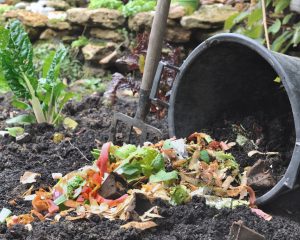
If you’ve ever contemplated composting at home you know that the plastic bins that hold household and yard waste are expensive, impossible to move, and rodent-prone. I know a low-cost solution!
Store-bought compost bins, like the one above, cost more than $100. (Would you believe Home Depot sells a composter that is $398?) Once the bins fill with waste, they can burst at the seams but are too heavy to relocate. The containers are open on the bottom, enticing raccoons and rats to dig a hole for easy trash access.
However, it is very easy to make your own composting bins from empty buckets. DIY power! Here’s what you need:
- 1 or more 5-gallon empty Homer buckets with lid (they are about $3 at Home Depot)
- A screwdriver
- A 1/4 or 1/2 inch drill bit
Put the lid on the bucket and drill 11 holes into it with the screwdriver and drill bit. Try making an inner circle with 5 holes and an outer circle with 6 holes on the lid. Next, turn the bucket on its side and make 15 more holes, spreading them out. Flip the bucket over and make seven final holes.
Voila! You have your very own composter. The holes let moisture out and the 5-gallon buckets are light enough, even when full, that you can easily turn and shake them to hasten the composting process. The tight lid deters vermin. If you want to collect the juice from the composter, it is smelly but great for plants.
Once you fill your bucket with a mix of food waste and green debris, the compost will be ready in about six weeks. Expect the volume to shrink to half its original heft.
This is a post by BargainBabe.com writer Yazmin Cruz.
Composting is a free source of organic fertilizer essential to properly take care of your garden. For many, composting is a daunting task because they think it is messy, pricey and time-consuming, but in my experience not one of these myths are not true.
Myth #1: Composting is difficult.
Composting can be difficult if you do not know what you are doing. Once you get the hang of it there isn’t much to it and messing up is pretty hard. Composting is simply the process of breaking down plant materials to form humus, (as opposed to hummus, which you eat). Homemade compost is the best fertilizer your plants ever had. There are different types of composting: hot composting, cold composting and vermicomposting.
I am most familiar with vermicomposting as that is the kind done at my community garden. Vermicomposting is very similar to hot composting in that you must mix wet and dry waste in a bin and turn it every now and then to create heat and accelerate decomposition. The difference is that hot composting does not require worms. In cold composting grass clippings and leaves decompose and as you may have guessed it, this process takes more time. There are specific things that are appropriate for composting and certain things you should never compost.
Myth #2: Composting attracts flies and smells.
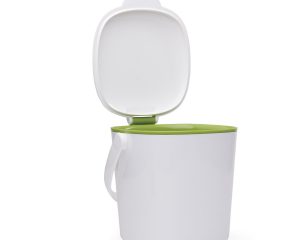
One of the reasons many people don’t want to compost is because they think it attracts flies and is smelly — after all it’s a pile of waste decomposing, right? Wrong. I have a small compost pail in my kitchen and it hasn’t once smelled bad when I have properly taken care of it. The same goes for the flies. I did once have an infestation of fruit flies but it was because I forgot about my pail for about a week in a half. My pail has a filter so it didn’t stink up the place but it did smell pretty bad when I went to drop it off at the community garden. Haven’t had any problems since but I try to consistently take out my pail full of food scraps every two or three days.
Myth #3: Composting requires a lot of space.
Composting can be accomplished by apartment dwellers. It’s just a matter of finding the right spot in your home. I was composting at home before I decided to take my food scraps to my community garden. I decided to stop composting at home for selfish reasons. If I contribute food scraps to the community garden compost I am able to use more compost for my plants.
Do you compost?
This is a post by BargainBabe.com writer Yazmin Cruz.
Two years ago I began gardening at a community garden near my home. There are many monetary benefits to community gardening, and there are some drawbacks. Here are the pros and cons I have experienced.
Land
PRO: Living in the city can be hard for a gardener because of the lack of space to plant. Getting involved in a community garden gives you a piece of land. Container gardening has limitations and with more space you can grow vegetables like zucchinis. You also have space to make your own compost.
CON: Many community gardens have waiting lists of up to a year so it is difficult to get a plot. My community garden does not charge a fee to join, but many do. Instead of a fee, I volunteer to weed the common areas and take care of the community garden’s rabbits. I used to spend 10 hours a week in the garden on weed duty but now spend I 15 hours in the garden taking care of the new bunnies.
Tools
PRO: Gardening can become very expensive if you purchase gadgets and tools. At a community garden, you can borrow tools the garden has made available, saving you a lot.
CON: With the constant use and natural wear and tear, tools don’t last long and aren’t always replaced immediately. Some gardens have more money than others to replace tools. It may also take time for you to get your hands on tools if other gardeners are using them.
Water
PRO: Some community gardens have free or significantly reduced prices for water. My community garden charges a water fee of $36 per year per plot. I have two plots in the garden and pay $72 a year, or $6 a month. Now that’s a deal!
CON: If your community garden charges for water, the fees can add up. Some charge steep fees to cover water usage while others divide up the cost evenly even if you are doing everything possible to save water.
Community
PRO: Community gardens are great at building bonds among gardeners and neighbors. At my garden, seasoned green-thumbs share tips with those who are not so good at gardening. When I first started gardening I met lots of people who shared their love of gardening with me and eventually became really good friends.
CON: Many times you want to spend alone time in your garden but community gardens don’t have much privacy. Your fruits and veggies may also disappear from time to time since everything is in the open and you are not there to watch it.
My community garden gives me space when I want to relax. It has some drawbacks but I wouldn’t be able to garden without it. If you are interested in joining a community garden check out the American Community Garden Association to find a garden near you.
Do you have a community garden? What to you like and dislike about it?
I am so excited it is garage sale season. I like looking at what people are selling because it is a glimpse into their lives. But mostly I like going to garage sales because I love the idea that you can find something amazing for almost nothing. Hosting a garage sale is not as fun, but if you prepare ahead of time it is an easy way to make a few hundred bucks.
1. Display is key. Cleanliness REALLY helps sales. A damp rag removes dust and dirt quickly. Presentation is key. Put everything on tables and benches so people did not have to get down on the ground to look at items. Back up option is to display items on blankets or in buckets. Clothes have a much better chance of selling if they are hung up. ?
2. Don’t sell crap. Shoppers driving-by will get turned off if they see dirty, broken, or extremely low-quality items. Also, the vast majority of clothes don’t sell so keep your expectations in check.
3. Price your items right. Bigger items that are clean and in top condition can go for as much as 50% of what you paid for them. If they are worn or damaged, reduce the price even more.
4. Make the price obvious. People may be too shy to ask or think you are ripping them off if you are not upfront about your prices. Put stickers/tags on each item. In the past I recommended pricing by category (i.e. $1 pile, $2 pile) but with this system you either have to remember what category each item was in, rely on the honesty of the buyer to tell you, or keep a master list of everything.
5. Be friendly but not in-your-face. I like to greet each person and find a simple hello opens the door to conversation about prices and specific items.
6. Be willing to negotiate. Many, many, many folks go to garage sales for the thrill of negotiating a deal. I’m not saying you should artificially inflate your prices, but keep in mind shaving off a dollar or two can make a sale. I accept most prices suggested by customers as people often have a set price they are willing to pay. As soon as traffic starts dying down, roughly two to three hours after the start time, cut prices significantly. Wouldn’t you rather make a buck or two off an old pair of shoes than drag them to Goodwill?
7. Drop prices early. If not a single customer has shown interest in an item during the first hour of the sale, when you will get the most traffic, cut the price. Don’t wait for someone who is willing to haggle. They may never show up!
8. Publicity will make or break your sale. The morning before, post your sale on Craigslist. In the post list with prices your top items, any hot brands you are selling, unusual items, and mention if you have a free pile. The more detailed you are, the better the chance someone looking for these items will find you. If you have enough free items, post them on Freecycle.org (free membership required to post).
The night before your sale make 5-10 signs. I like to write in bold letters “SALE” with an arrow pointing to my yard on manilla folders. In smaller letters I write the date and start time. The address is usually irrelevant because yard sales are a visual magnet.
9. Get started early. The morning of the sale haul your stuff out while keeping your items grouped by price, which makes it easy for customers to assess what you have. Be prepared for aggressive “early birds” who will want to wheel and deal before you have finished dragging everything else out. Do you want to make sales while still laying out your stuff? Decide ahead of time.
Good luck and have fun!
By Mike Barclay of 10 Cents Worth
How many times have you bought a new appliance and tossed the old one? Nothing was wrong with the old one, you just didn’t have any need for it anymore. The key word in that last sentence is “you.”
Mike Morone, who lives in New York, has come up with a revolutionary idea to take all the old items we’re throwing away and offer them to others. It’s called “Give Your Stuff Away Day” and it is this Saturday, May 15.
What happens is people put the junk they typically would throw out on the curb for neighbors to peruse, grab or swap. Suddenly the old toaster that you were going to toss is now in the hands of Mrs. Smith down the street – not in the local landfill.
The process has its drawbacks, which Mike himself told me, but he’s convinced in the long run that this will ultimately shrink landfills and promote a less wasteful society. There are drawbacks, however. Leaving stuff on your curb for a weekend looks messy and if the idea catches on you’ll see an increase in traffic. “Think of Christmas – a wonderful time of year, but messy,” Morone says. The event could also increase in waste management costs from people leaving things on the curb for pick up.
Mike’s idea for a set weekend to swap is new, but swapping is old hat. Freecycle.org has been around since 2003 and has grown to more than 7 million users that post and request items for free exchange. I’m a big Craigslist.com fan as well, because they not only have a “free” section, they also have a “bartering” area where you can exchange items and services. If you pay close attention to what’s going on in your own area you can often find (or even create) a “Really, Really Free Market.”
If Give Your Stuff Away Day is something you want to happen in your area, it’s up to you to coordinate it with your community. Give Your Stuff Away Days are organized by word of mouth. What could possibly be better than making the world a cleaner place, making new friends AND get things for free? I’m not sure I can think of much.
One of the downsides – or perhaps you think it’s an upside – to growing your own food is funky fruit. Check out this lemon I found in my backyard!
It reminds me of a neti pot, hehehe. This lemon’s bizarre shape made me realize that so much of the food we consume is picture perfect. You would NEVER see something like this for sale at Albertsons. Shoppers expect “normal” looking produce, which means a lot of food must get thrown away, which in turn raises prices. So if you knew buying a lemon like this would contribute to lower prices, would you take it home?
Have you noticed how incredibly cheap strawberries are right now? They are one of many fruits in season so the prices are fantastic. I’ve paid as little as $.79 for a pound! Here is a quick and easy recipe to serve fresh strawberries as a dessert or snack.
1 package strawberries, sliced into quarters with tops removed
1/2 juicy lemon, remove seeds and squeeze over berries
1-2 T powdered sugar, depending on how ripe your berries are
1 T chopped mint leaves
You can serve over ice cream if you want but they are delicious by themselves!
What is your favorite strawberry recipe?