newspaper pots 300x225 How to make newspaper pots for seedlings

henna lion / Flickr

This is a post by BargainBabe.com writer Yazmin Cruz.

Making your own seedling pots is an easy and inexpensive way to get your garden started for spring. This weekend I’m making pots out of newspaper to start my basil plants. I’ll show you how to make your own pots below.

(more…)

strawberries1 Sweet savings: how to grow strawberries

CaptPiper / Flickr

This is a post by BargainBabe.com writer Yazmin Cruz.

Strawberries are super expensive when they are not in season. But you can save money by growing them yourself. Here is what I’ve learned about growing strawberries that have helped me reap a bounty.

In the spring, I decided to try my hand at planting strawberries in my garden. This weekend I picked about a gallon’s worth of berries!

(more…)

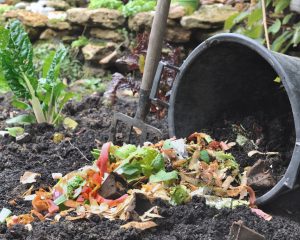
composter contents 224x300 13 things you didnt know about composting

Soil in the making!

We picked up a huge composter for $45 this past weekend at a recycling event after outgrowing our $4 homemade composters. What excites me – other than rotting food waste in my kitchen – is the tip booklet that came with it. A complete guide to composting!

Making rich soil saves me a ton of money on dirt and shortens my grocery list – I’m growing my food! So don’t pay attention to compost rumors.

Convenience is the number one factor in locating your composter. If it’s too far away, you won’t use it, especially if you get nasty winter weather. One solution is to keep a smaller homemade composter near your kitchen door. When it fills up, make one big trip to your main composter.

A kitchen pail with lid is crucial. Fill it up with food waste during the day, then dump it into your composter as part of dinner cleanup. A lid keeps fruit flies away. We got bugs last summer so I’m dumping it after lunch, too.

Hair, dryer lint, and paper napkins

(more…)

blueberries1 Spring gardening tips

jspatchwork / Flickr

This is a post by BargainBabe.com writer Yazmin Cruz.

With the weather getting warmer, gardening season has officially begun. You may already have seedlings growing in containers that are ready to be transplanted, but before you do that here are four things you need to accomplish to reap the benefits.

  1. Remove weeds - These little suckers will sprout anywhere, even from cement and they will suck the life out of your plans by feeding off of the soil’s nutrients. Spending a good amount of time removing weeds will pay off. Make sure to get to the root of the problem by digging them out and not just pulling them.
  2. Take a Soil Test – Check soil

    (more…)

mosaic pot 300x225 How to make a mosaic flower pot

soulshine20_05/Flickr

Spring and gardening on are my brain, even though today my world is covered in gray fog. I can’t see more than a few hundred feet out my window! A short article in the Spring issue of freshHOME takes the mystery our of making a mosaic pot for flowers, veggies, or cat grass! Making a mosaic pot costs about $20, requires 1.5 hours plus however long it takes you to gather supplies (see list below), and is a relatively low skill project. Let’s get started!

Supplies you need

Tile, old china you can break into pieces, smooth stones, glass beads (thrift stores are a great place to find cool plates) (more…)

This gardening post was brought to you by the UK’s Pond Liner Website. Bradshaws Pond Liner company stock a wide selection of garden pond filters and pond pumps including the Oase Pond Pump and the Hozelock Pond Pump. Check it out for some seriously good bargains on any garden pond liner or automatic fish feeder.

By Bobbi Burger Brunoehler of Bobbisbargains.

7309362 16f9784ad9 m Spring garden resources and to dos

Muffet/Flickr

One of my greatest pleasures is working in my garden. Not only do I get Vitamin D from the sun, but I also get exercise, fresh air and the occasional fresh fruit or veggie. Although each individual seed packet or plant doesn’t cost a lot of money, the expenses DO add up.

Here are five of my favorite sites to help you with your garden schedule and budget:

  1. KinderGARDEN is a wonderful site chock full of links to help you garden with kids. I had a great time (more…)

seedlings greenhouse 225x300 How to protect seedlings from cool weather

Homemade greenhouses to protect fall seedlings.

I started a fall garden in August and so many sprouties popped up that I had to transplant some of them outside prematurely. I was resigned to seeing the outdoor seedlings die because they are not hardy enough, until I mentioned my dilemma to a gardener friend.

Cut a clear plastic bottle in half, remove the label and cap, and you’ve got a mini-greenhouse, she said. Brilliant!

The hole at the top lets air in and moisture out, while keeping the seedling a few degrees warmer. The mini-greenhouse also protects from harsh winds and rain storms.

You can use bottles of soda, seltzer, water, or anything else that comes in clear packaging (to let the sun through). I bought two bottles of seltzer for $.50 each and made four mini-greenhouses, three of which are pictured above. For the bottom half of the bottle, I was not able to cut a hole in the center because the plastic was too thick. Instead, I cut a hole off to the side of the bottom, where the plastic is (more…)

working 300x225 Fall gardening tips to continue saving money during the cool months

programwitch / flickr

This is a post by BargainBabe.com writer Yazmin Cruz.

With shorter days and longer nights approaching, it�s time to start preparing your garden for fall. �Before you begin planting, there are many tasks that need to be completed. Here are some fall gardening tips to get ready for the next growing season and continue to save money through gardening.

Rearrange

Here’s one of the toughest jobs you must accomplish, but it must be done. You need to get rid of all the diseased or damaged plants that have stopped producing and look tired in your garden. This is work – some of your spring plants may be monstrously (more…)

squash winter 300x225 In season produce that is cheap, plus fall gardening tip

deb roby/Flickr

Here is an update on what produce is currently in season and a resource for what to plant in your late summer/fall garden. The below list of in-season produce is a good indicator of what fruit and vegetables will have the best prices. Greater supply…lower prices. Plus, in-season produce is often grown closer to home than out-of-season produce, which we import from Chile, Mexico, and other countries. Expect prices for early summer fruits and vegetables to rise.

The following list of fall fruits and vegetables comes from FruitsAndVeggiesMoreMatters.org. The list includes many hardy lettuces and squashes. If you can’t remember what is in season, price is a good indication.

Acorn Squash
Belgian Endive
Broccoli (more…)

IMG 2031 300x225 Swapping garden goods to save money

Yazmin Cruz

This is a post by BargainBabe.com writer Yazmin Cruz.

The Frugal Festival was the first time I had been to any kind of swap. That day, as volunteers and I sorted through clothes, the anticipation built in the room. Come the swap start the anticipation turned to excitement as hundreds of people rushed in the doors to swap. I didn’t swap then, but got my first swapping experience this past weekend.

I was invited to a garden swap in the Milagro Allegro Community Garden in Highland Park, California where gardeners exchanged everything from tools to produce.

I must admit I was a skeptic. I didn’t think I’d end up liking it as much as I did. I don’t even like participating in Secret Santa come Christmas time because I usually end up with the worst gift. But not this time.

The swap was free of charge and was organized much like the Frugal Festival. There was a specific area for everything people brought to swap like plants, seeds, magazines, produce and “worm tea,” which is worm pee used for fertilizing.

I arrived a little late but was still able to exchange the seeds I had brought with me. I had all kinds of seeds including dill, broccoli rabe, kale, and lima beans. I also had seeds that I’d harvested myself like basil and cilantro seeds.

Here’s my haul and approximately how much I saved:

  • “Organic Gardening” magazine – $3.99
  • “Sunset” magazine – $4.99
  • Heirloom cucumber seeds – $2
  • Organic Plums (10) – $6.90
  • Organic Tomatoes (2 lbs.) – $5
  • Aloe Vera plant – $4
  • Organic Bay Leaves – $4
  • Organic Pineapple Sage – $2

Total Saved: $32.88

IMG 20322 225x300 Swapping garden goods to save money

My goods.

I am now a believer – swapping is the new shopping. If you’ve never participated in a swap, you must. BargainBabe.com writer Bobbi wrote a post on how to get the most out of a swap that is essential to read before heading to your first swap.

I already leafed through my magazines and found yummy recipes using my tomatoes and bay leaves, and I can’t wait to try my pineapple sage tea, which I hear is good for anxiety. The only thing I wasn’t able to get was the worm tea, but I hear the community garden is looking to have swaps every last Sunday of the month and you know I’ll be there.

What kind of swaps have you participated in and how much money have you saved?

cucumber 225x300 Friday fun: things grow strange in Rhode IslandHave you ever seen such a bizarre looking cucumber? It grew through a light plastic mesh fence I installed to protect my Rhode Island garden, which I planted on an earlier visit. (Did you miss my post about moving across the country?) Everything seems to grow very well in the Ocean State so I’m satisfying my gardening itch for sure. The smaller plants I culled from my garden will go into my homemade composters.

You can still see a little of the black mesh, which the cucumber partly swallowed. It took me a few minutes to cut the questioning vegetable free. I plan to use it in one of my favorite salads, which I copied from a friend who isn’t fond of measuring spoons.

Favorite cucumber salad

1 cucumber, chopped small

juice of two lemon (or to taste)

chili pepper (few dashes)

cayenne pepper (if you like it spicy)

If you can, marinate everything for an hour, but this is optional. You can also add diced red onions or a diced tomato. Has anything as strange as my cucumber grown in your garden?

Related posts:

How to save money by gardening

Recipe for easy dessert with fresh strawberries

composter hd How to make your own composter for cheap

HomeDepot.com

If you’ve ever contemplated composting at home you know that the plastic bins that hold household and yard waste are expensive, impossible to move, and rodent-prone. I know a low-cost solution!

Store-bought compost bins, like the one above, cost more than $100. (Would you believe Home Depot sells a composter that is $398?) Once the bins fill with waste, they can  burst at the seams but are too heavy to relocate. The containers are open on the bottom, enticing raccoons and rats to dig a hole for easy trash access.

composter 227x300 How to make your own composter for cheapHowever, it is very easy to make your own composting bins from empty buckets. DIY power! Here’s what you need:

  • 1 or more 5-gallon empty Homer buckets with lid (they are about $3 at Home Depot)
  • A screwdriver
  • A 1/4 or 1/2 inch drill bit

Put the lid on the bucket and drill 11 holes into it with the screwdriver and drill bit. Try making an inner circle with 5 holes and an outer circle with 6 holes on the lid. Next, turn the bucket on its side and make 15 more holes, spreading them out. Flip the bucket over and make seven final holes.

Voila! You have your very own composter. The holes let moisture out and the 5-gallon buckets are light enough, even when full, that you can easily turn and shake them to hasten the composting process. The tight lid deters vermin. If you want to collect the juice from the composter, it is smelly but great for plants.

Once you fill your bucket with a mix of food waste and green debris, the compost will be ready in about six weeks. Expect the volume to shrink to half its original heft.

compost 300x225 Composting myths and truths

hoyasmeg/Flickr

This is a post by BargainBabe.com writer Yazmin Cruz.

Composting is a free source of organic fertilizer essential to properly take care of your garden. For many, composting is a daunting task because they think it is messy, pricey and time-consuming, but in my experience not one of these myths are not true.

Myth #1: Composting is difficult.
Composting can be difficult if you do not know what you are doing. Once you get the hang of it there isn’t much to it and messing up is pretty hard. Composting is simply the process of breaking down plant materials to form humus, (as opposed to hummus, which you eat). Homemade compost is the best fertilizer your plants ever had. There are different types of composting: hot composting, cold composting and vermicomposting.

I am most familiar with vermicomposting as that is the kind done at my community garden. Vermicomposting is very similar to hot composting in that you must mix wet and dry waste in a bin and turn it every now and then to create heat and accelerate decomposition. The difference is that hot composting does not require worms. In cold composting grass clippings and leaves decompose and as you may have guessed it, this process takes more time. There are specific things that are appropriate for composting and certain things you should never compost.

Myth #2: Composting attracts flies and smells.
One of the reasons many people don’t want to compost is because they think it attracts flies and is smelly — after all it’s a pile of waste decomposing, right? Wrong. I have a small compost pail in my kitchen and it hasn’t once smelled bad when I have properly taken care of it. The same goes for the flies. I did once have an infestation of fruit flies but it was because I forgot about my pail for about a week in a half. My pail has a filter so it didn’t stink up the place but it did smell pretty bad when I went to drop it off at the community garden. Haven’t had any problems since but I try to consistently take out my pail full of food scraps every two or three days.

Myth #3: Composting requires a lot of space.
Composting can be accomplished by apartment dwellers. It’s just a matter of finding the right spot in your home. I was composting at home before I decided to take my food scraps to my community garden. I decided to stop composting at home for selfish reasons. If I contribute food scraps to the community garden compost I am able to use more compost for my plants.

Do you compost?

By Bobbi Burger Brunoehler of Bobbisbargains.

534086511 29117f40ff Upholstery, Landscaping and Auto Body Repair at a deep discount

basykes/Flickr

I recently received an email asking me where to get a chair re-upholstered at an affordable price and I instantly thought of a very unknown resource – occupational centers and technical schools. These are public schools that teach older students occupations like:

  • furniture upholstery
  • fashion design
  • web graphics
  • auto body repair
  • landscaping
  • floral design
  • construction
  • baking/cooking
  • hair and beauty
  • and much more

Most of these schools connect folks like you and me with students looking for experience at low fees. Many of these students are looking for experience and to build a portfolio and referrals. The work might not be perfect, but if you get a student who is just about finished with their studies, you could get a great product and a great deal.

I used a student to help me with my home landscaping. He was awesome. He educated me on different plants and helped me to pick out what would grow in my yard. He was very reasonably priced. As a matter of fact, I paid him more than he asked because he charged so little for all the work he did.

In California these schools are part of the California Association of Regional Occupational Centers and Programs (CAROCP.) In the Los Angeles area, these schools are called Los Angeles Occupational Centers. The mission of these occupational centers is to “provide exemplary career education, career development, and workforce preparation that contribute to student academic and career success and to the economic development of California.” These schools are also a resource for you to find classes at a very reasonable price. Classes for eligible students are around $50.

In New York State, there are New York Technical and Vocational Schools. I don’t know if their tuition is as reasonable as the California schools, but the advice about hiring students remains the same. I’m sure that there are similar schools in every state in America.

And who knows, the student designer that you use to help you create a custom wedding dress might just turn out to be the next hot thing. Think how lucky you will be to have one of their early works. You’ll be able to tell people that you knew they were headed for greatness.

Have you ever hired a student to do work for you?

Related posts:

Home improvement: DIY a waste of time?

How to find a cheap haircut

One of the downsides – or perhaps you think it’s an upside – to growing your own food is funky fruit. Check out this lemon I found in my backyard!

lemon 300x284 Friday fun: would you eat this?

It reminds me of a neti pot, hehehe. This lemon’s bizarre shape made me realize that so much of the food we consume is picture perfect. You would NEVER see something like this for sale at Albertsons. Shoppers expect “normal” looking produce, which means a lot of food must get thrown away, which in turn raises prices. So if you knew buying a lemon like this would contribute to lower prices, would you take it home?

Coupons.com